
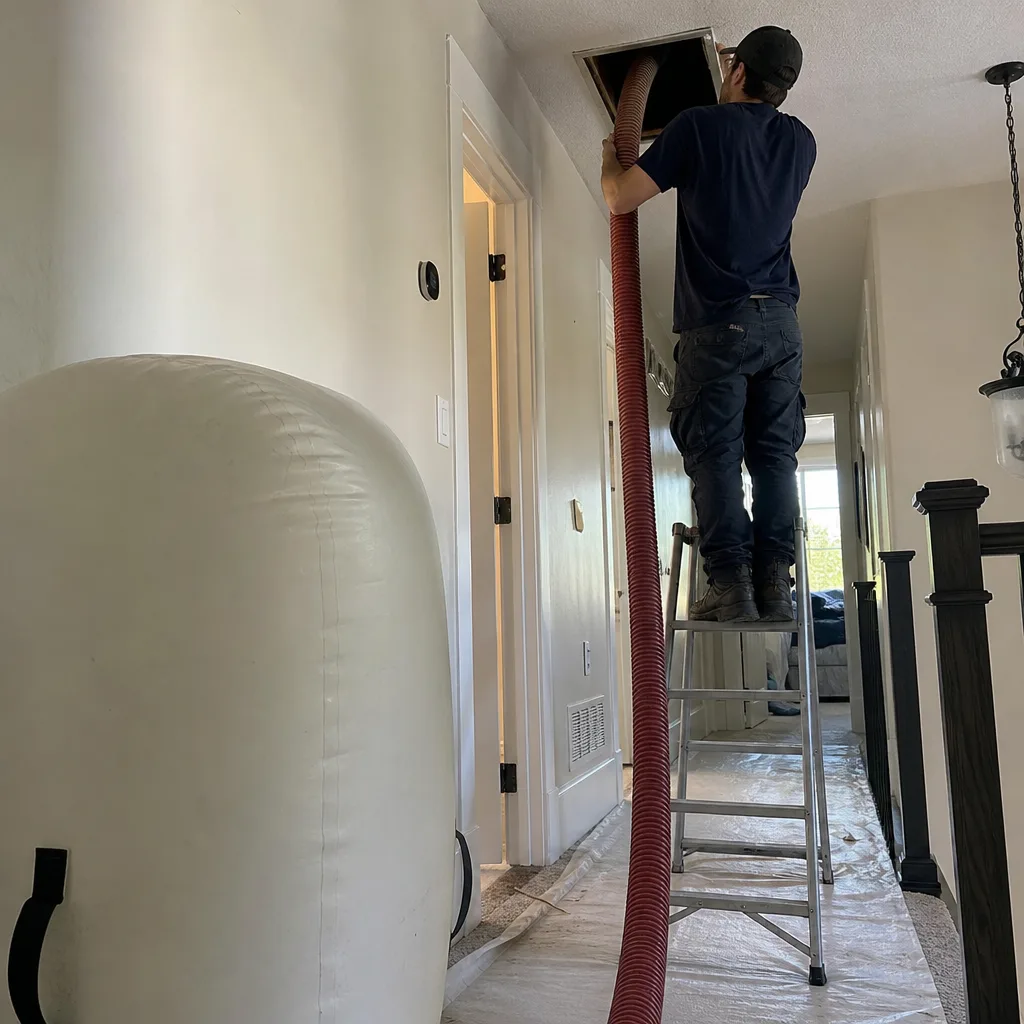
Last updated November 25, 2026
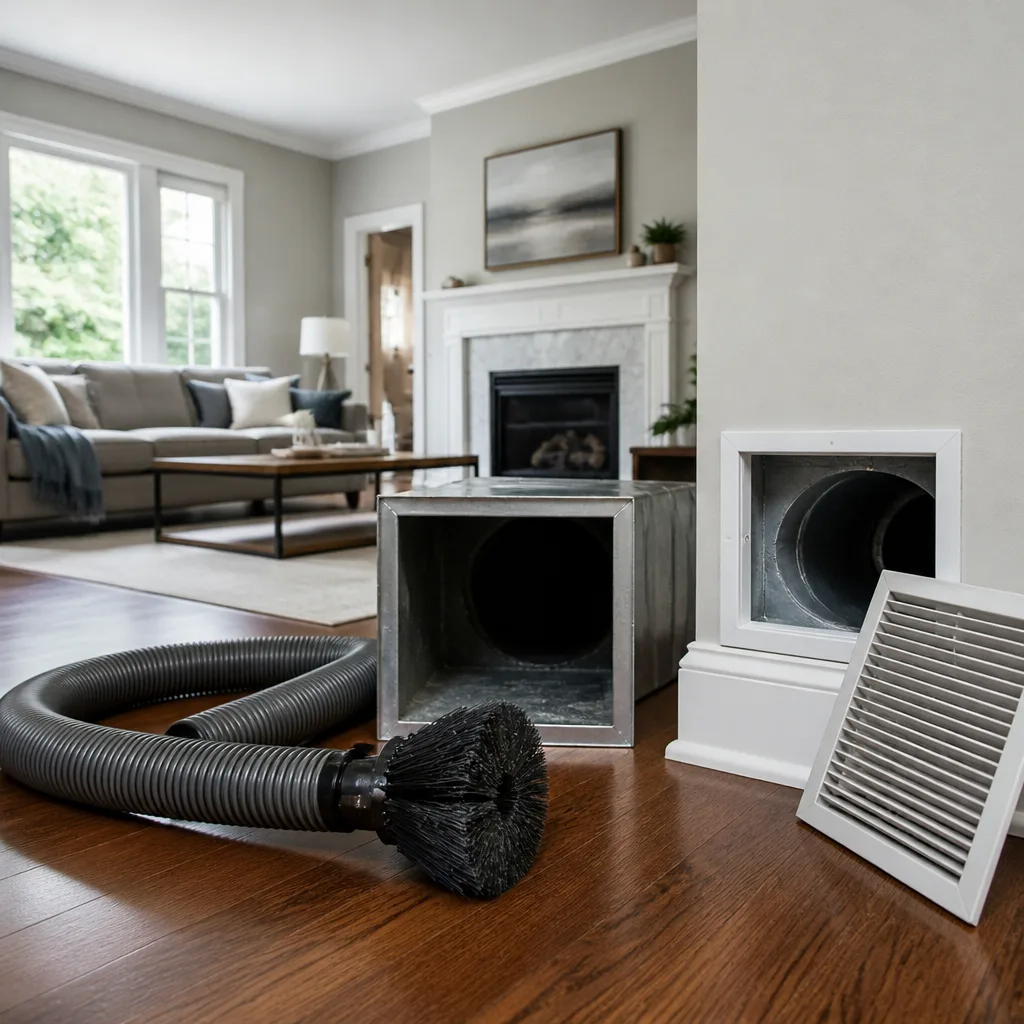 Whole-home duct cleaning
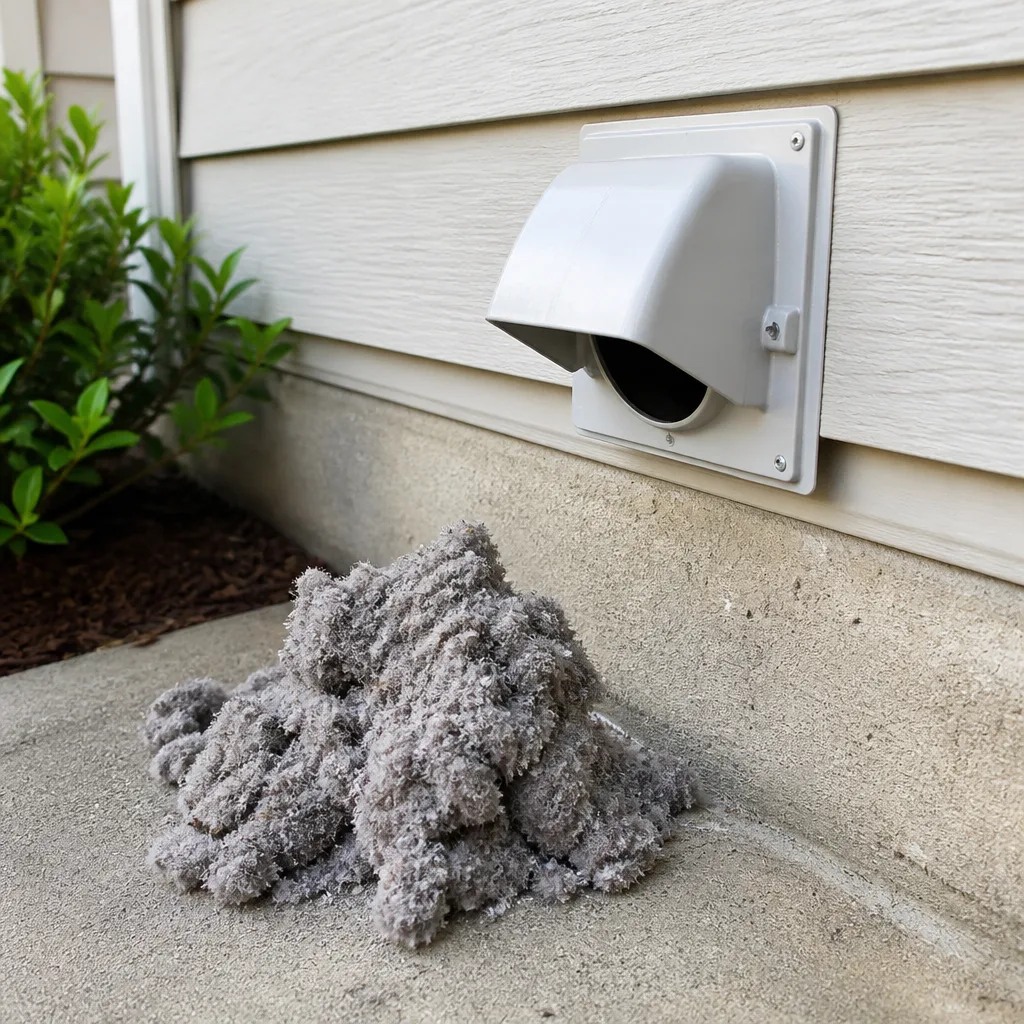 Dryer vent cleaning
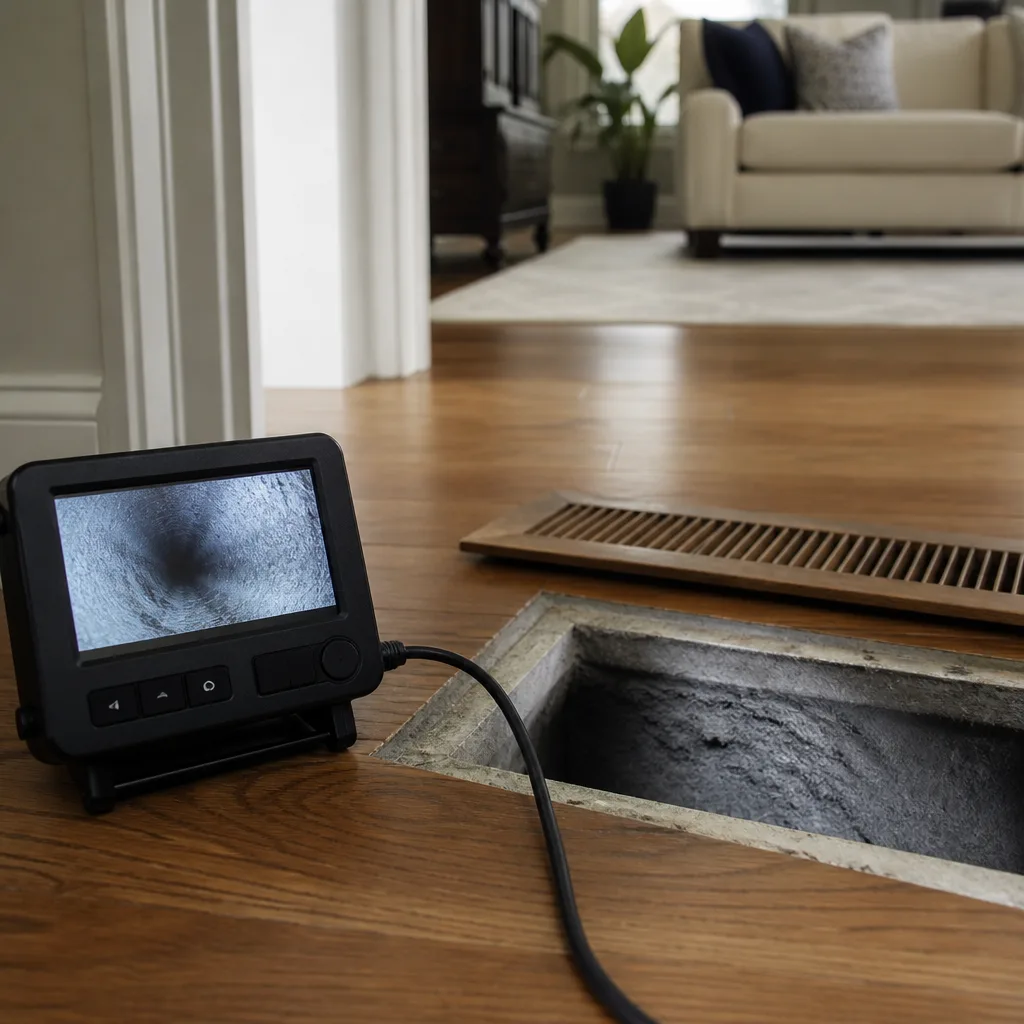 Camera inspection
 Sanitizing & deodorizing
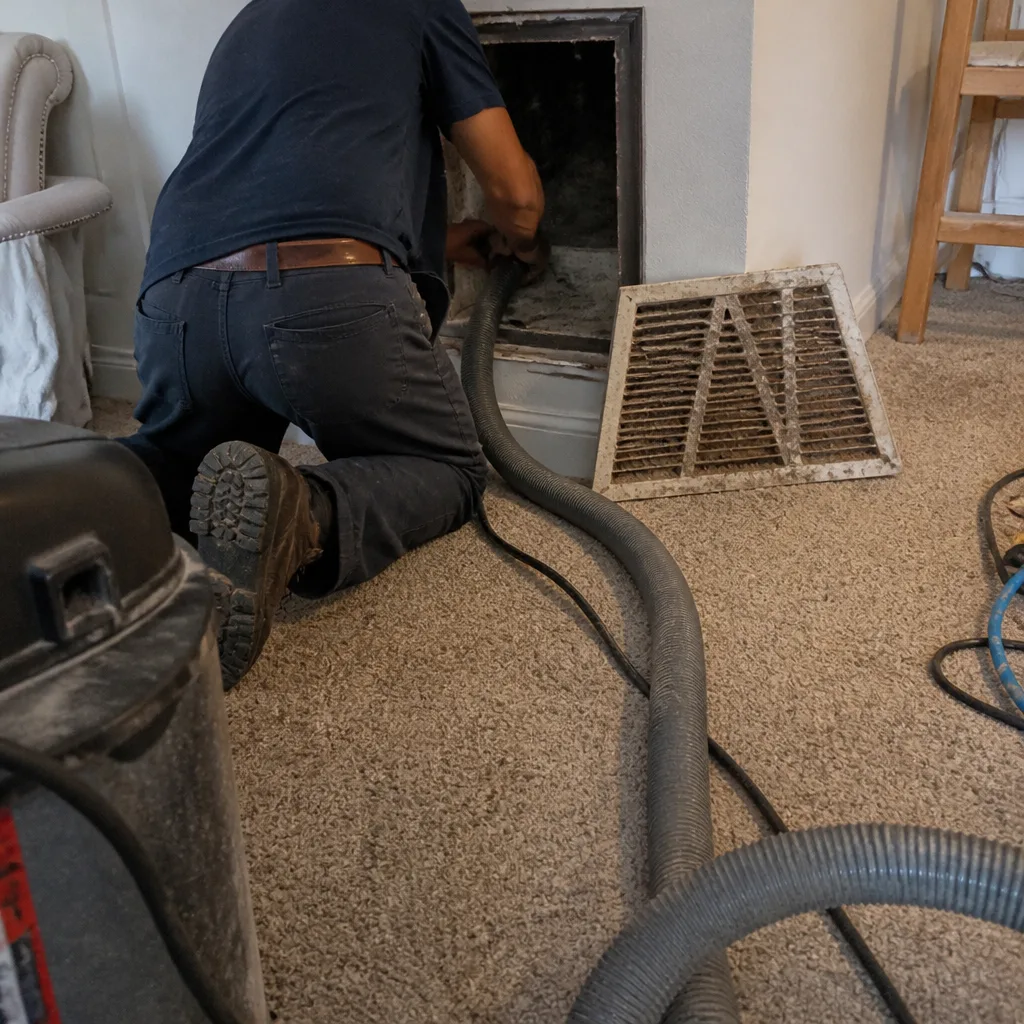
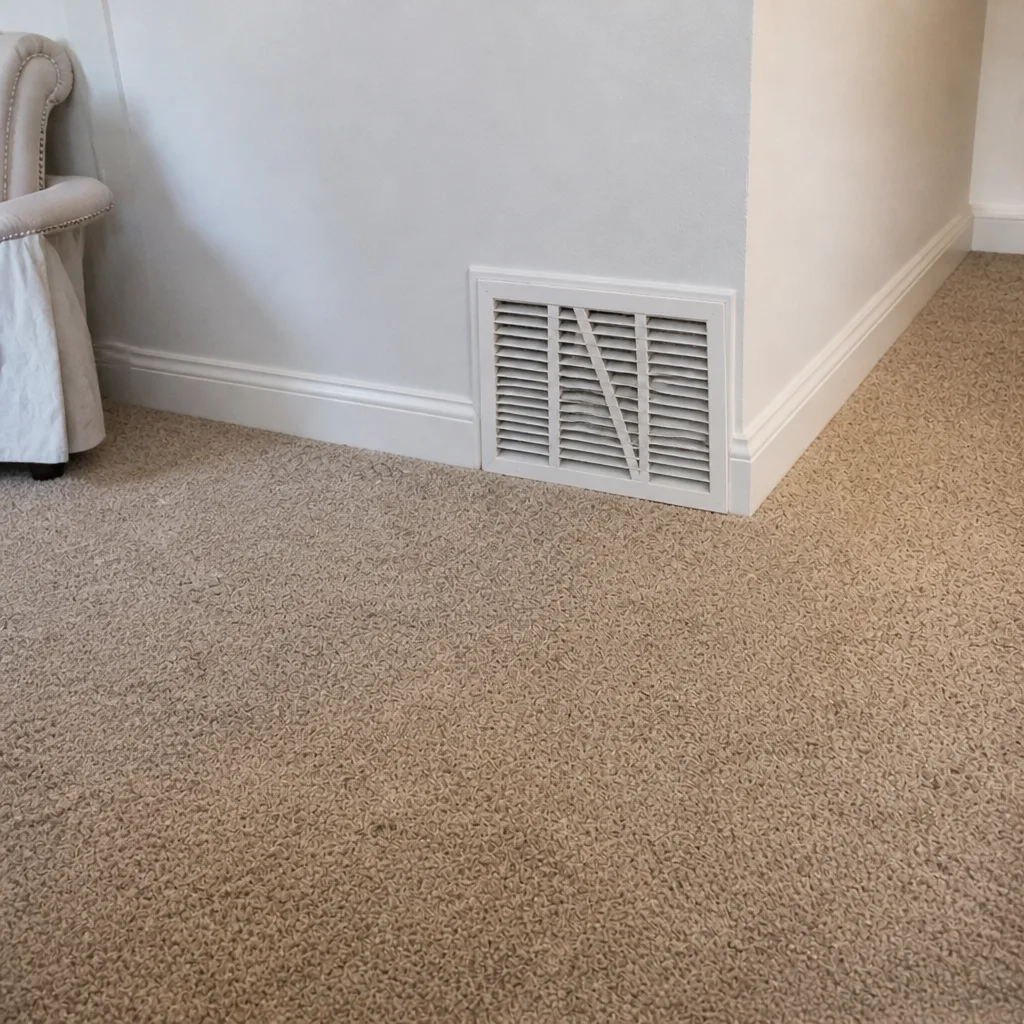
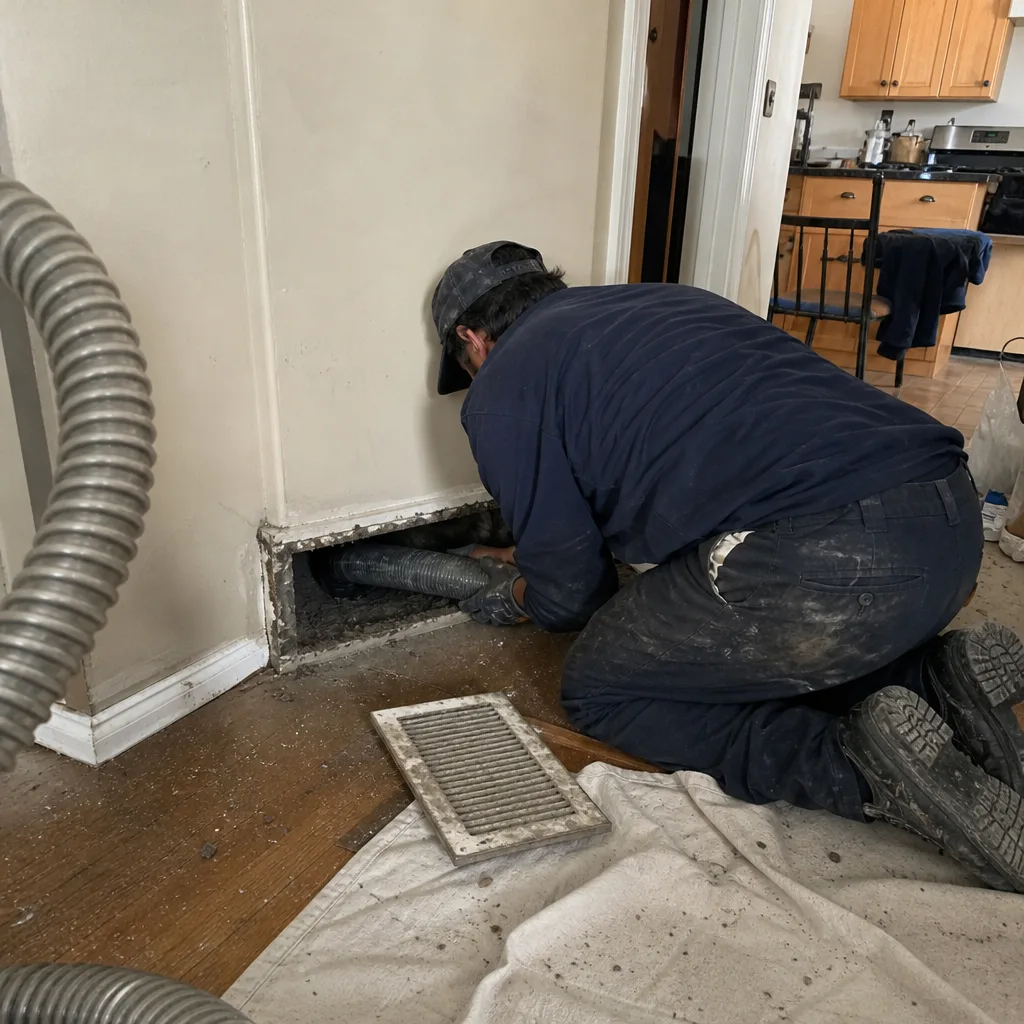
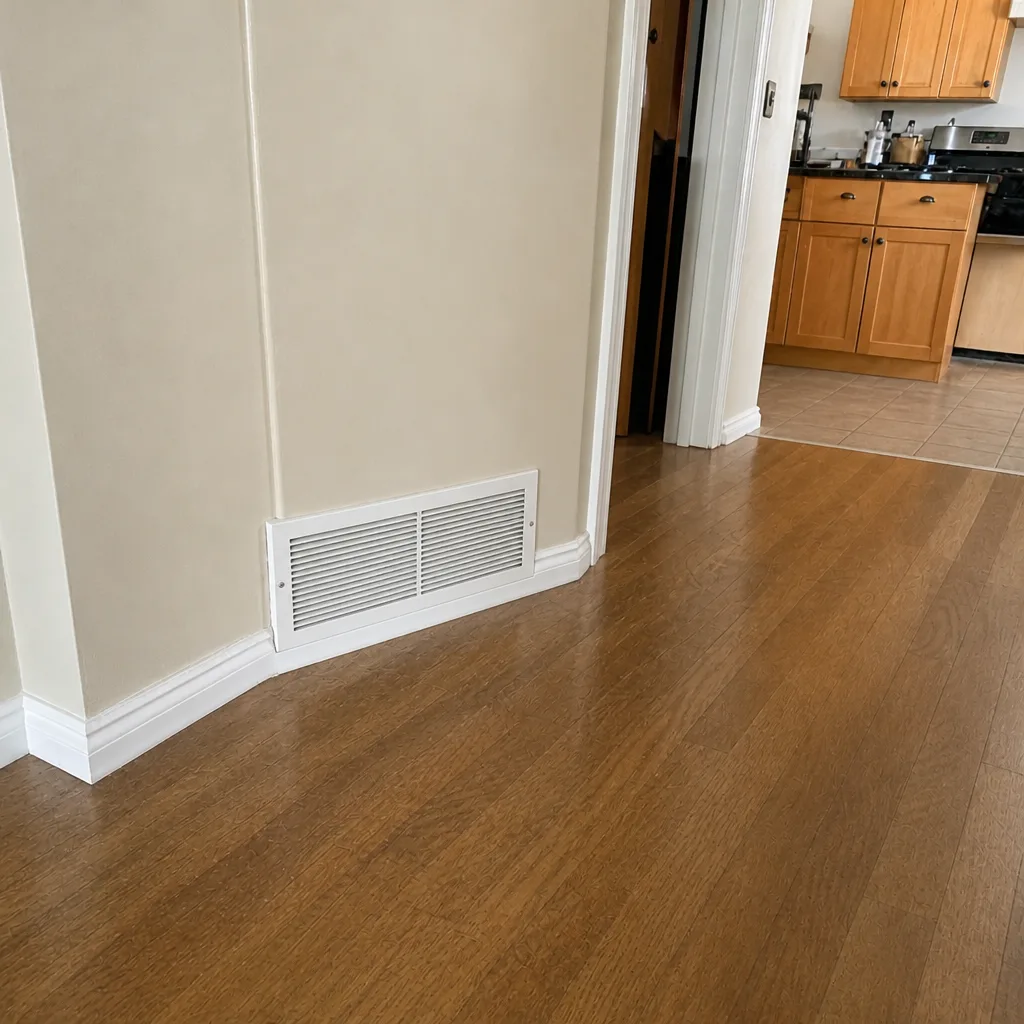
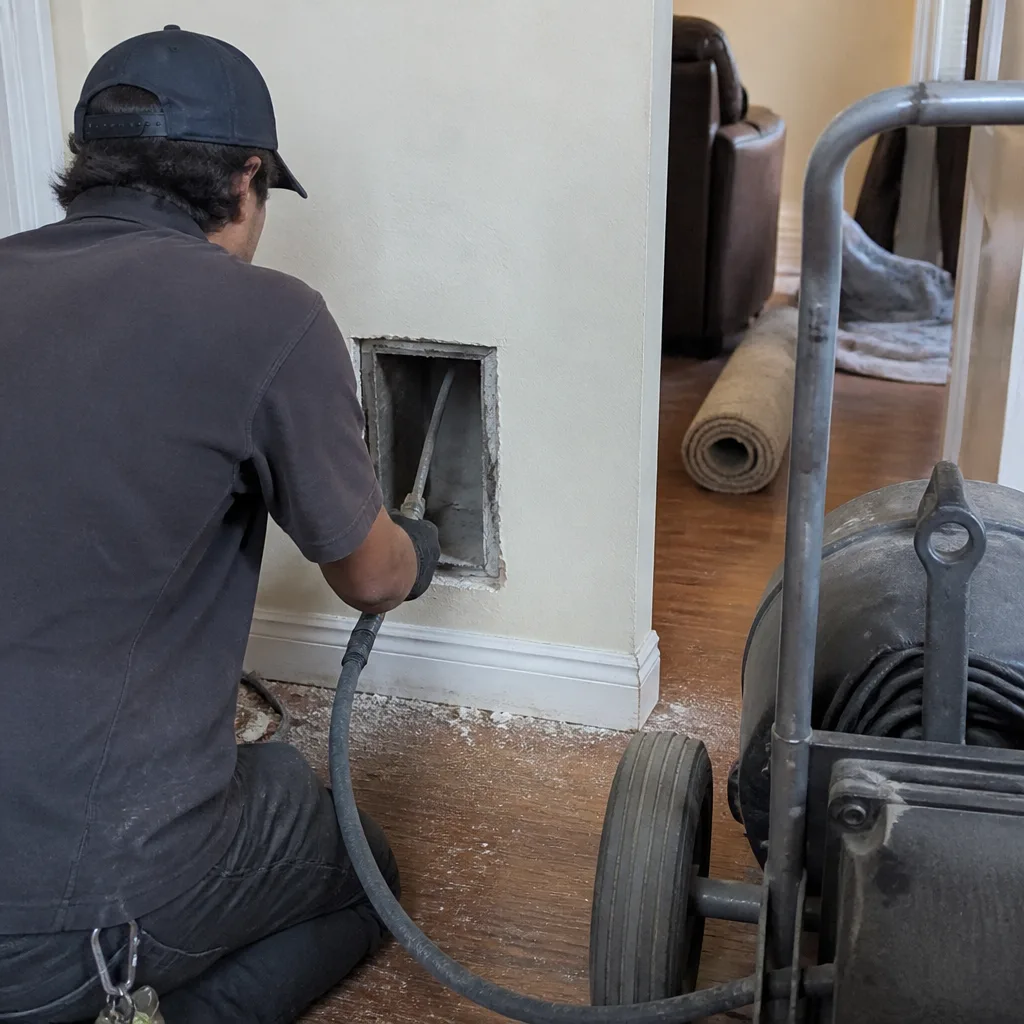
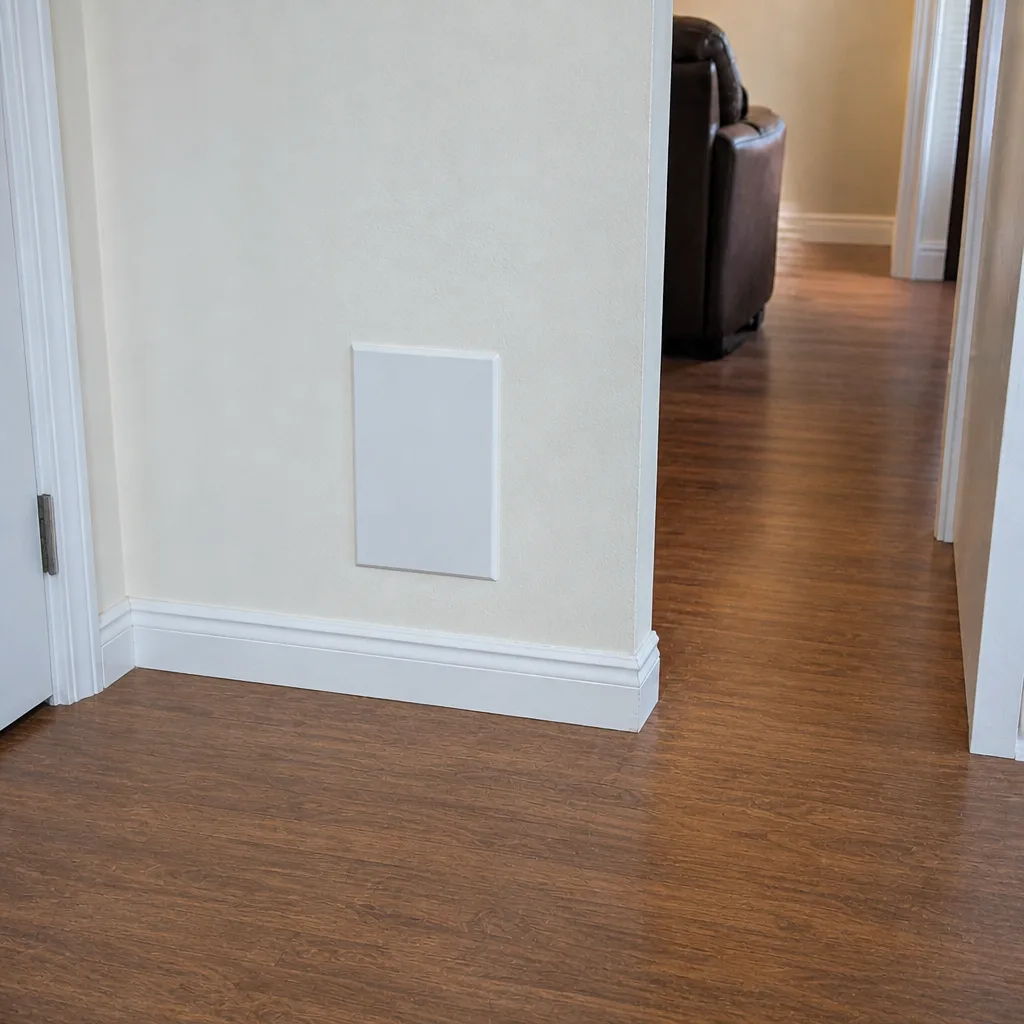
Whole-system duct and dryer vent check with before-and-after photos - you see exactly what came out of your vents
That "$99 whole-house special" is a bait ad - the real number appears once they are in your hallway, or the "clean" is a shop-vac at the register. We photograph the inside of your ducts before and after instead.
Air Duct Cleaning Warning Signs: A South Jordan Homeowner’s Reference Guide
By the time you can see dust caking the supply registers in your living room, your system has likely been moving that debris through the conditioned air for weeks. The signs that actually matter appear earlier, and they show up in places most homeowners never look: the filter slot, the return grille, the edges of the supply boots. This guide is about reading those early indicators. We’ll cover how filter loading rate works as a diagnostic, what different return-grille debris patterns tell you about the contamination source, how to tell one duct odor from another, and when an airflow problem points to obstruction instead of leakage. South Jordan sits in a high-desert valley with long heating seasons and windy spring dust, and that shapes what we look for.
Quick Answer
Early air duct warning signs in South Jordan usually appear at the return grille and the filter rather than the supply vents you can see. A MERV-8 filter that clogs in two weeks instead of lasting closer to its rated interval, dark streaking around return grilles, musty or sharp odors when the blower starts, and uneven airflow between rooms are the indicators worth acting on first. Visible dust on supply registers is a late-stage signal, not an early one.
Styles & brands we work with
- Whole-home duct cleaning
- Dryer vent cleaning
- Camera inspection
- Sanitizing & deodorizing
Table of Contents
- Filter Loading Rate: The Most Underused Diagnostic
- Reading Return Air Grille Debris Patterns
- Odor Differentiation: Mold, Rodent, Burned Debris, Off-Gassing
- Airflow Asymmetry Between Rooms
- Health Symptom Patterns and Indoor Air Quality
- How a Professional Inspection Actually Works
- South Jordan Seasonal Patterns Worth Watching
- When to Call a Professional
Filter Loading Rate: The Most Underused Diagnostic
A clean filter is a measurement tool, not just a barrier. When you install a new filter and note the date on its edge, you’ve created a baseline. The rate at which that filter loads tells you what’s moving through your return system long before the supply vents show anything. If a filter rated for roughly a 90-day interval looks heavily loaded after two to three weeks, the return duct upstream of it is carrying far more particulate than a clean system should. That’s an early warning sign, and it’s cheap to watch.
What “heavily loaded” means in practice is a filter you can’t see light through when you hold it up, or one that’s noticeably heavier in the hand than a fresh one. A uniform gray coating is usually ordinary household dust and lint. Dark streaks concentrated in one corner or along one edge point to a local source feeding that section of the return. Filter loading isn’t a substitute for a camera inspection, but it’s the first data point we ask about, and it costs you nothing to track.
What different loading rates suggest
- Uniform loading at the expected interval: normal for the system, no action beyond the routine replacement schedule.
- Fast uniform loading, entire face: widespread particulate in the return, often construction dust or long-deferred cleaning.
- Fast loading with a concentrated dark patch: a localized source near one return branch, which could be a leak pulling attic or crawlspace air.
- Loading on the outlet side of the filter slot: bypass around the filter frame, meaning debris is getting past it into the coil and supply side.
On the Wasatch Front, spring wind events push fine dust against the house envelope, and any leak in the return duct near an attic penetration becomes a dust intake. That’s why we recommend noting the date and taking a photo of the filter each time you change it. Comparing photos over a season is a genuine early diagnostic that no vent-dust observation can match.
Reading Return Air Grille Debris Patterns
The return grille is the front door of your duct system, and its debris pattern is a fingerprint. What’s caught on the face, what’s stuck in the fins, and what’s accumulated in the boot behind the grille each tell you something different. A homeowner who learns to read these patterns spots contamination before it’s distributed through the supply side. In South Jordan, where homes range from newer builds in Daybreak to established neighborhoods like Glenmoor and Jordan Heights, the age and construction style of the house shapes what shows up at the return.
Patterns and what they suggest
- Fine gray-brown powder, uniform across the grille: ordinary household dust and skin-cell particulate, the typical slow accumulation of a system that hasn’t been cleaned in years.
- White or pale fibrous clutter: often insulation fiber. This can come from a compromised duct liner, an unsealed attic connection, or a ceiling penetration that was never properly closed.
- Sharp grit and granular fragments: a possible sign of drywall or construction dust that was never fully cleared after a renovation, common in homes that had work done before move-in.
- Dark droppings or smears concentrated along one edge or corner: a rodent intrusion indicator. Rodent activity in a return near a garage wall or an exterior penetration is common in many South Jordan neighborhoods and warrants quick attention.
- Streaking on the wall or ceiling around the grille: often a sign of air infiltration or pressure imbalance rather than duct contamination alone, and it can indicate that return air is being pulled through an unintended path.
Construction dust is worth a special note. Newer South Jordan builds and homes that have had additions or remodels frequently carry drywall and framing dust that settled into ductwork during the build and was never cleared. That debris tends to accumulate at the returns before it works its way into the supply branches. If your home is newer or recently renovated, a return-grille inspection is the fastest way to know whether the contractor’s cleanup reached the ducts.
Odor Differentiation: Mold, Rodent, Burned Debris, Off-Gassing
Not every duct odor is a duct problem, and treating all of them the same wastes money and can miss a real hazard. The smell you notice when the blower starts is diagnostic, and the right first response depends entirely on which one you’re dealing with. Here’s how we separate them.
1. Mold and mildew
Musty, damp-basement smell. In South Jordan this is less about outdoor humidity and more about localized moisture, such as a condensate drain that doesn’t carry away properly, a set of ducts that sweats, or an unsealed return pulling air from a damp crawlspace. First response: stop running the system continuously in the affected zone and have the coil and duct interior inspected with a camera. Mold inside ductwork is a remediation issue, not a cleaning issue, and it should be handled with containment and air filtration equipment.
2. Rodent
Sharp, ammoniacal, sometimes musky smell that’s strongest near a specific return or at the air handler. This often comes with droppings at the grille and a pattern of scratching or gnawing at a duct joint or flex run. First response: pest control first, then duct cleaning and sealing, because cleaning a system that’s still got active rodent access is a temporary fix. Sealing the entry points matters as much as the cleaning.
3. Burned debris or hot metal
A sharp, metallic, slightly acrid smell near the air handler is a different animal entirely. This can come from debris contacting a heat exchanger, a failing blower motor, or an electrical component inside the equipment. First response: shut the system down and have the equipment inspected before running it again. Don’t treat this one as a duct cleaning call.
4. Off-gassing insulation or new materials
A faint chemical or fiberglass smell, common after a remodel or in a home with newer duct liner. It’s often strongest when the system first starts. First response: check for a compromised liner or an unsealed attic or crawlspace connection. If the smell is coming from within the duct material itself, that’s a repair and sealing question rather than a cleaning one.
Sorting the odor first saves time and points toward the right service. In our experience, homeowners who can describe the smell accurately get a faster, more accurate answer when they call, whether it’s about air duct cleaning or a repair and sealing evaluation.
Airflow Asymmetry Between Rooms
Uneven heating and cooling is one of the most common complaints we hear in South Jordan, and it’s also one of the most misdiagnosed. A room that never quite warms up or a bedroom that feels stuffy while the kitchen is comfortable can mean several different things, and the fix depends on which one it is. The occupant experience feels similar, but the cause is not.
What each cause feels like from inside the room
- Obstruction: one room falls noticeably short of others and stays short no matter how long the system runs. The register may have weak flow even with the damper wide open. This points to a blocked or crushed branch, debris in a flex run, or a collapsed liner.
- Leakage: the shortfall is inconsistent and worse on windy days or when other systems run. An unsealed joint or a disconnected run in the attic can bleed air before it reaches the room, and it may also carry dust and attic particulate into the system.
- Damper failure: flow changes suddenly or swings between rooms as the system cycles. A damper stuck partway or a balancing issue means the air is going somewhere, just not where you need it.
Room-by-room airflow comparison is a useful early check. A homeowner can walk the house with the system running and feel each supply register by hand. A register that feels noticeably weaker than its neighbors is a data point worth noting. It won’t tell you which of the three causes is at work, but it narrows the field and gives a technician a starting point. Duct repair and sealing is often the answer when the shortfall is scattered rather than concentrated in one room, and it’s a service we recommend evaluating alongside a cleaning when the airflow pattern is inconsistent.
Health Symptom Patterns and Indoor Air Quality
This is the section we approach most carefully, because it’s easy to overstate. We are not clinicians and we don’t diagnose. What we can do is point out a pattern that homeowners and property managers often notice before they think to look at ductwork, and explain when it’s worth raising the question with a professional. A respiratory pattern that lines up with the system cycling, or that clears when someone is away from the house for a stretch, is a signal worth taking seriously. A pattern that tracks the local pollen season is a different conversation, and South Jordan’s spring pollen load is heavy enough to explain a lot on its own.
The correlation worth watching is timing, not diagnosis. Symptoms that are noticeably worse in rooms with weaker airflow, that come on within minutes of the heat or AC starting, or that follow a renovation or a new-home purchase are the kind of pattern that points toward an indoor air quality question rather than a seasonal one. If more than one person in the household reports the same pattern, that’s a stronger signal than a single complaint. None of this replaces a doctor’s advice. What it does is give you a reason to look at the air pathway, and an air quality sanitizing service or a filtration upgrade through a HVAC cleaning evaluation is a reasonable next step when the pattern lines up.
We install and service Honeywell and Aprilaire filtration and air-quality equipment, which means the conversation about filtration can be part of the same visit as the duct assessment rather than a separate contractor’s job. When the symptom pattern is real, the response should be specific: measure, inspect, and address the source rather than guessing at a filter upgrade.
How a Professional Inspection Actually Works
An inspection isn’t a sales pitch wrapped in a flashlight. A proper one follows a sequence, and knowing the sequence helps you judge whether a contractor is doing real diagnostic work or just looking for a reason to quote a cleaning. Here’s how we walk a South Jordan home.
- Filter and return assessment. We look at the filter’s loading pattern and date, then open each return grille to read the debris pattern and check for the warning signs above.
- Air handler and coil inspection. The coil condition and the inside of the air handler tell us whether debris has been getting past the filter, and whether biological growth or moisture is present.
- Camera inspection of main trunks and branches. A camera run through the supply and return trunks shows us the actual interior condition, including debris depth, liner condition, and any disconnected or crushed runs.
- Containment and negative pressure setup. Before cleaning, we establish negative pressure with Abatement Technologies air filtration equipment and protect surfaces and finishes with Guardsman products. This is what keeps dust from migrating into the living space during the work.
- Mechanical cleaning with contact tools. Rotobrush and Nikro mechanical systems get to the duct walls rather than just pulling loose dust from the vent openings.
- Post-clean verification. A second camera pass confirms the ducts are clean from the inside out. We provide before-and-after photos of your own ducts so you can see the difference rather than take it on faith.
The tools matter because the job isn’t a surface vacuum pass. Commercial-grade equipment run by technicians who understand what they’re looking at is the difference between a real cleaning and a cosmetic one. Our technicians have up to 10 years of experience, and the scope covers duct cleaning, dryer vent cleaning, HVAC cleaning, duct repair and sealing, and air quality sanitizing as one trade.
South Jordan Seasonal Patterns Worth Watching
Where a house sits in the valley changes what its duct system deals with across the year. South Jordan’s long heating season means the system runs hard from late fall into spring, and that continuous operation is what pushes accumulated debris into the living space. The spring wind and dust events along the Wasatch Front load the return side, and the first hot stretch of summer is when airflow complaints surface as the AC starts working harder. Homes near the Oquirrh foothills see more wind-driven dust at exterior penetrations, which is one more reason to check return grilles and filter loading in that part of town.
A simple seasonal routine catches most of this early. Change the filter on a schedule and note the date. Check one return grille each season and photograph it. Walk the house with the system running at the start of each heating and cooling season and note any room that feels weak. None of these take long, and together they form a record that tells you when something has genuinely changed rather than just accumulated. If your dryer vent is on your radar for the same reason, dryer vent cleaning is a sensible pairing, since lint accumulation is its own warning-sign category and the vent often runs through the same utility spaces as the HVAC equipment.
Common Mistakes to Avoid
- Watching the supply vents and ignoring the return. Dust on the supply registers is the late signal. The early signals live at the filter and the return grille, and a homeowner who checks those spots catches problems before they spread.
- Assuming a clean filter means clean ducts. A filter that loads normally doesn’t rule out debris settled in the return branches or the trunk. The filter protects the equipment; it doesn’t clean what’s upstream of it.
- Treating every odor the same. A burned-debris smell and a musty smell point to different first responses. Running the system to “see if it clears” is the wrong move when the smell is metallic or sharp.
- Chasing the lowest quote in South Jordan. A quote far below the others often means a vacuum-and-a-wave rather than a contained, mechanical cleaning. Ask what equipment, what containment, and whether you’ll get before-and-after photos of your own ducts.
- Cleaning before pest control when rodents are involved. If droppings are present at the return, sealing the entry points first prevents the problem from returning within weeks of a cleaning.
- Skipping the camera inspection. A walkthrough with a flashlight can’t show the inside of a main trunk or confirm a collapsed liner. Insist on a camera pass before and after.
- Ignoring new-home and post-renovation dust. Construction dust that settled into the ducts during a build or remodel is common in South Jordan’s newer neighborhoods and rarely clears on its own.
See the difference
 Before
 After
 Before
 After
 Before
 After
When to Call a Professional
Some warning signs are worth a call, and some can wait for a scheduled service. Call sooner if a filter rated for roughly 90 days loads in two to three weeks, if you notice droppings or gnaw marks at a return, if a burned or hot-metal smell appears near the air handler, if a room’s airflow drops suddenly, or if you’ve recently moved into a newer or renovated home in South Jordan and haven’t had the ducts inspected. A musty smell that doesn’t clear, a respiratory pattern that lines up with the system cycling, and visible debris around return grilles are all reasonable times to get an assessment. South Jordan Air Duct Cleaning Pros offers free estimates in South Jordan. Call (844) 443-4758. We answer 24/7. Fast dispatch from 7am to 7pm, Sunday through Friday.
Frequently Asked Questions
There’s no single interval that fits every home. The honest answer is that it depends on filter loading rate, return grille debris, whether the home has had a renovation or a new build, and whether pets or allergy concerns are in the picture. A home with a fast-loading filter needs attention sooner than one that loads on schedule. Call (844) 443-4758 for an exact quote, and the inspection will tell you where your system actually stands.
The first warning sign is a filter loading faster than its rated interval. A MERV-8 filter that looks heavily loaded after two to three weeks instead of lasting closer to 90 days is telling you the return side is carrying more particulate than it should. Check the return grilles next, then call if the pattern holds.
Usually, yes. Mold and mildew smell musty and damp; rodent activity smells sharp and ammoniacal and often comes with droppings at the grille. A burned or metallic smell is a separate signal and calls for shutting the system down and having the equipment inspected. Call (844) 443-4758 for an exact quote if you’re unsure which one you’re dealing with.
In most cases, yes. Drywall and framing dust from a remodel settles into the return and supply branches, and it rarely clears on its own. Newer homes in South Jordan’s growth areas often have the same issue from construction dust that settled before move-in. A camera inspection confirms what’s actually there.
Cheap quotes usually skip the parts that make the work real: containment, negative pressure, mechanical contact cleaning, and post-clean verification with photos. A vacuum at the vent openings doesn’t reach the duct walls or the main trunks. Ask what equipment is used, whether containment is set up, and whether you’ll get before-and-after photos of your own system. Call (844) 443-4758 for an exact quote on a full-scope cleaning.
Ask for before-and-after photos of your own ducts, not stock images, and ask for a post-clean camera verification. The tools matter too: Rotobrush and Nikro mechanical systems clean the duct walls rather than just pulling loose dust, and Abatement Technologies containment keeps the work area protected while it happens. A contractor who can show you the difference and explain the equipment is one you can judge.
The Bottom Line
The warning signs that matter most in South Jordan show up early, at the filter and the return grille, long before dust reaches the supply vents. Filter loading rate, return debris patterns, odor differentiation, and airflow asymmetry are all readable by a homeowner who knows what to watch. What separates a well-maintained system from a problem is whether the early signals get acted on. A camera inspection with commercial-grade equipment and before-and-after photos tells you exactly where your system stands, and one flat price per system agreed before work starts means no surprises on the invoice. Start with a free estimate.
Call (844) 443-4758. We answer 24/7. Fast dispatch from 7am to 7pm, Sunday through Friday. For a full walkthrough of the services behind this guide, see South Jordan Air Duct Cleaning Pros, and if the information above points toward a specific job, the estimate sets the final price.
Written by the team at South Jordan Air Duct Cleaning Pros.